
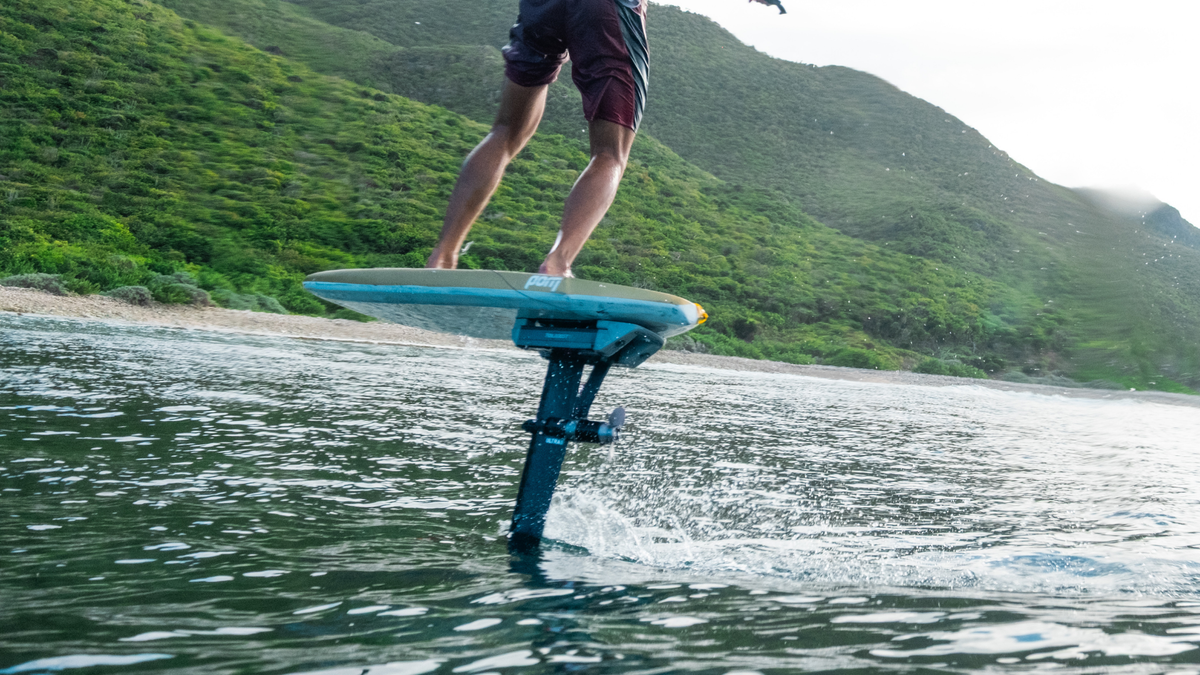
Every foiler knows the feeling of looking at the forecast, seeing nothing, and writing off the day. A foil assist is the tool that turns those days back into sessions. This is how it works, and why sailing in marginal conditions is the strongest reason to have one.
The days you normally skip
Little wind. Small, weak waves. Flat, smooth water with nothing to catch. On a normal foil setup, these are non-events. You need energy from wind or waves to get up and stay up, and when there isn’t enough, there’s no session.
This is most of the calendar for many riders. The forecast cooperates only a fraction of the time, and the rest of the days go unused.
How an assist changes the equation
An assist adds its own energy. A thrust boost gets you on foil without needing waves or wind, and small boosts keep you flying when conditions can't. This causes two things. It turns dead days into sailable days, and lets you practice much more often because you no longer depend on the perfect window.
For anyone learning or progressing, this makes the difference between a few good sessions per season and consistent time on the foil all year round.
What to look for in a system for marginal days
Two specifications determine how a system performs when conditions are not favorable. The thrust, because without wind or waves to assist you, the motor does more of the work to lift you. And the capacity, because sailing on marginal days demands more from the motor than a clean wave day.
FoilBoost combines 33 kg of maximum thrust with 400 Wh of capacity. The thrust gets you flying without any help. The capacity keeps you active during a session that relies more on the motor.
The honest limit
An assist is not infinite. Sailing in marginal conditions consumes more energy, so manage your battery and sail within its limits. The goal is not unlimited power. It's to turn a day you would have skipped into a real session.


